
Skip Content
You are currently on the new version of our website. Access the old version .

International Journal of Environmental Research and Public Health

International Journal of Environmental Research and Public Health (IJERPH) is a transdisciplinary, peer-reviewed, open access journal that covers global health, healthcare sciences, behavioral and mental health, infectious diseases, chronic diseases and disease prevention, exercise and health related quality of life, environmental health and environmental sciences, and is published monthly online by MDPI.
The International Society Doctors for the Environment (ISDE), Italian Society of Environmental Medicine (SIMA) and Environmental Health Association of Québec (ASEQ‑EHAQ) are affiliated with IJERPH and their members receive discounts on the article processing charges.

All Articles (65,610)

  • Perspective
  • Open Access

Breast cancer is the most common cancer among women worldwide and a leading cause of mortality. Stark differences in outcomes across income levels, regions, population groups, and healthcare systems reflect deep inequities in access to early detection, diagnosis, and treatment. Due to remarkable scientific advances and many global initiatives, breast cancer is often perceived as a “finished agenda”. This Call to Action, led and endorsed by a multidisciplinary panel of international experts in breast cancer care, policy, and healthcare systems, provides a structured approach to guide countries in improving breast cancer care through the Breast Cancer Care Quality Index (BCCQI), a unified, expert-endorsed tool that translates broad guidance into practical metrics. The Call to Action outlines a framework for country profiling across the BCCQI dimensions: early detection, timely diagnosis, comprehensive management, and strong and resilient healthcare systems. Applying a structured self-assessment matrix linked to tiered recommendations, the Call to Action supports country performance assessment and the development of context-sensitive roadmaps for concrete interventions. By linking assessment to actionable guidance, the Call to Action underscores the urgency of coordinated national efforts and international support to close existing gaps and accelerate progress toward high-quality breast cancer care for all patients.

6 February 2026
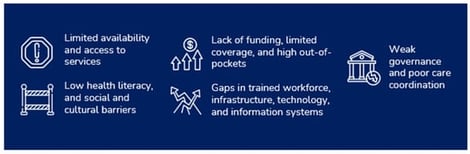
Overview of key challenges in breast cancer care.

Occupational conditions across the life course may leave a lasting imprint on health in later life, particularly in unequal and largely informal labor markets. This study examined associations between lifetime occupational history and health status among older adults in Ecuador using nationally representative data. We analyzed 5235 participants aged ≥ 60 years from the SABE Ecuador 2009 survey. Occupational history was characterized by economic sector, physical demands, and self-reported exposure to dust, chemicals, heat, and other hazards. Health outcomes included self-rated health, physician-diagnosed diabetes, hypertension, chronic respiratory disease, arthritis, and visual and hearing limitations. We estimated survey-weighted PRs using Poisson regression with robust variance, adjusting for age, sex, education, region, residence, marital status, and household assets, and conducted sex-stratified analyses. Physically demanding work trajectories were associated with a higher prevalence of fair/poor self-rated health (adjusted PR 1.28; 95% CI: 1.10–1.49), with stronger effects in women. Agricultural employment was associated with chronic respiratory disease among women (adjusted PR 1.62; 95% CI: 1.12–2.36), but not men. These findings suggest that long-term occupational exposures contribute to health inequalities in older Ecuadorians and support integrating occupational history into geriatric assessment and strengthening gender-sensitive occupational health protections, particularly in the agricultural sector.

8 February 2026

Regular participation in recreational physical activity is a key determinant of population health, yet behavioral heterogeneity across adults remains insufficiently understood. This study examined how demographic, anthropometric, and psychological characteristics relate to exercise type (H1), weekly frequency (H2), daily duration (H3), motivational regulation (H4), personality-based differences in exercise modality (H5), and multidimensional behavioral clustering (H6) within a large sample of physically active recreationally active adults. A total of 1564 participants (age: M = 33.65, SD = 9.83 years) completed standardized questionnaires assessing physical activity behavior, body mass index, weight history, personality traits (Five-Factor Model), and motivational regulation (BREQ-2). Non-parametric tests, multinomial logistic regression, and cluster analysis were applied. Gender and age consistently predicted exercise frequency and duration (H1–H3), while higher BMI and reported weight problems were strongly associated with health- and appearance-related motives (H4). Personality traits were linked to exercise modality but showed limited associations with motivational regulation (H5), suggesting that activity preferences reflect relatively stable psychological profiles, whereas motives are more context-dependent. Cluster analysis identified three distinct behavioral profiles combining demographic, physical, and psychological attributes (H6), with meaningful differences in exercise modality, duration, and motivational orientation. These findings provide preliminary evidence for the utility of behavioral segmentation in recreational physical activity and highlight the potential of tailored public health strategies that account for demographic, anthropometric, and personality-based differences in engagement patterns.

8 February 2026

Background: Since World War II, the number of motorized vehicles has increased dramatically. Yet, few studies have evaluated how perceptions of single and multiple motorized traffic variables, in different combinations, influence pedestrians’ appraisals of the route environment in relation to whether it facilitates or deters walking. We have previously illuminated this in an inner urban area of a metropolitan region. This study aims to scrutinize these matters in the suburban–rural parts of the same metropolitan area. For comparative reasons, we use the same methods as used for the inner urban area. Our hypothesis is that these kinds of perceptions, to some extent, may be context-specific. Methods: Relations between pedestrians’ perceptions of motorized traffic variables (flow and speeds of motor vehicles, noise, and exhaust fumes) and combinations of them, as well as if appraisals of route environments hinder–stimulate walking and are unsafe–safe for reasons of traffic, have been evaluated. This was studied in the suburban and rural areas of Greater Stockholm, Sweden. The pedestrians (n = 233) rated their route environment with the Active Commuting Route Environment Scale (ACRES). Correlation, multiple regression, and mediation analyses were used to study the relationships. Results: The regression analyses showed that noise was the primary negative predictor variable in relation to hindering–stimulating walking. With respect to the other outcome, unsafe–safe traffic, none of the variables had a significant relation. The mediation analyses showed that (1) vehicle speed had an indirect effect on unsafe–safe traffic via noise, (2) both vehicle speed and vehicle flow had, via noise, indirect effects on hinders–stimulates walking, and (3) vehicle speed had, via vehicle flow, an indirect effect on noise and exhaust fumes. Conclusions: In suburban–rural route environments, noise protrudes as a hindering variable for walking. The mediation analyses showed that vehicle speed intensified noise and had negative effects on both outcomes. Therefore, by reducing vehicle speed, noise levels will be lowered, and the walking experience is likely to be enhanced, which can influence the amount of walking. The results are further illuminated through the exploration of existing and potential future research strategies.

6 February 2026

News & Conferences

Issues

Open for Submission

Editor's Choice

Reprints of Collections

Access to Public Health Services and Challenges to Healthcare Management
Reprint

Access to Public Health Services and Challenges to Healthcare Management

Editors: Isabella Piassi Dias Godói, Carlos Podalirio Borges de Almeida

Get Alerted

Add your email address to receive forthcoming issues of this journal.

XFacebookLinkedIn
Int. J. Environ. Res. Public Health - ISSN 1660-4601